
Sudden_shifts_and_luck_around_the-crash-casinos-ca_ca_in_gaming
- Sudden shifts and luck around the-crash-casinos-ca.ca in gaming
- Understanding the Mechanics of Crash Games
- The Role of Provably Fair Technology
- Psychological Factors in Crash Game Play
- Managing Emotions and Setting Limits
- Strategies for Playing Crash Games
- Advanced Techniques: Using Auto Cash Out Effectively
- The Future of Crash Gaming and Regulatory Considerations
Sudden shifts and luck around the-crash-casinos-ca.ca in gaming
The allure of risk and reward has always been a captivating element of human nature, and this is powerfully reflected in the growing world of online gaming. A particularly intriguing segment of this landscape is represented by platforms like the-crash-casinos-ca.ca, where players engage in a unique form of entertainment that combines elements of chance, strategy, and psychological fortitude. These games, often referred to as “crash” games, present a dynamic experience distinct from traditional casino offerings. They center around a rising multiplier, constantly increasing the potential payout, but with the ever-present threat of a sudden 'crash' that can wipe out your stake.
The core concept is deceptively simple: players place a bet and watch as a multiplier begins to climb. The longer the multiplier increases, the higher the potential winnings. However, at any moment, the multiplier can ‘crash,’ resulting in the loss of the initial bet. The key is to cash out before the crash occurs, securing a profit based on the multiplier at the time of withdrawal. This creates a thrilling and often anxiety-inducing experience, demanding quick reflexes and a calculated approach. The rapidly escalating nature of potential earnings combined with the impending danger makes these games exceptionally compelling for a wide audience seeking a novel form of online entertainment.
Understanding the Mechanics of Crash Games
At the heart of a crash game lies a random number generator (RNG), a sophisticated algorithm designed to ensure fairness and unpredictability. This RNG dictates the point at which the multiplier will crash, making it impossible to predict with certainty. While some players believe they can identify patterns or manipulate the system, the fundamental truth is that each round is independent and based purely on chance. However, understanding the subtle nuances of how these games operate can significantly improve a player's strategy. For instance, many platforms display a history of previous multipliers, allowing players to analyze past results, though these historical data points should not be regarded as predictive indicators of future outcomes. They serve only as a descriptive record rather than a forecasting tool.
The user interface (UI) of most crash games is intentionally clean and intuitive. A prominent graph displays the multiplier's progression, easily showcasing the potential gains and the looming threat of a crash. Players are typically provided with options to automatically cash out at a pre-determined multiplier – a feature crucial for those who want to lock in profits or protect themselves from impulsive decisions. Furthermore, some platforms introduce ‘auto-cash out’ capabilities, allowing players to set a target multiplier and an optional ‘stop-loss’ limit, further enhancing their ability to manage risk. The simplicity of the interface belies the complexity of the underlying psychological factors at play. The rising multiplier acts as a strong incentive to delay cashing out, creating a cognitive bias towards maximizing potential gains, even in the face of escalating risk.
The Role of Provably Fair Technology
A significant aspect of establishing trust in online crash games is the implementation of ‘provably fair’ technology. This ensures that the outcome of each round is demonstrably random and not manipulated by the platform. Provably fair systems use cryptographic algorithms that allow players to verify the integrity of the game. Essentially, the player receives information before the round begins – the server seed and the client seed – and after the round ends – the nonce. Using these values, the player can independently calculate the outcome and confirm that the game was indeed fair. This transparency dramatically increases player confidence and differentiates legitimate platforms from those with questionable practices. It underscores the importance of choosing platforms that prioritize fairness and accountability.
The implementation of provably fair technologies extended to blockchain integration. Some crash platforms have embraced blockchain solutions, leveraging the inherent security and transparency of distributed ledger technology. This can involve using blockchain to generate and verify random numbers, further solidifying the integrity of the game. Blockchain-based systems offer an immutable record of all game events, making it virtually impossible to tamper with the results. This adds another layer of security and trust for players. While blockchain integration is still relatively nascent in the crash game space, it represents a promising development towards greater transparency and accountability.
| Low | Moderate | Early cash-out (1.2x – 1.5x multiplier) to secure small but consistent profits. |
| Medium | High | Balanced approach, cashing out at a multiplier between 1.5x and 3x, requiring careful observation. |
| High | Very High | Late cash-out (3x+ multiplier), significantly increasing risk but offering potentially massive rewards. |
Choosing the right risk level is crucial. Beginners should start with low-risk strategies, gradually increasing their risk tolerance as they gain experience and develop a better understanding of the game dynamics. Remember that even with a low-risk approach, losses are still possible, so responsible gambling practices should always be prioritized.
Psychological Factors in Crash Game Play
The thrill of crash games is deeply rooted in psychological principles. The rising multiplier taps into our inherent desire for reward and the potential for substantial gains. This can lead to a state of “flow,” where players become fully immersed in the experience, losing track of time and external factors. However, this immersion can also be detrimental. The fear of missing out (FOMO) often compels players to delay cashing out, hoping for a higher multiplier, even when the risk is significantly increased. This is a classic example of the ‘sunk cost fallacy,’ where players continue to invest in a losing situation because they have already invested a significant amount of money or effort. Understanding these psychological biases is essential for playing responsibly and making rational decisions.
Furthermore, the intermittent reinforcement schedule inherent in crash games – where rewards are unpredictable but occur frequently enough to maintain interest – is highly addictive. This is the same principle used in slot machines and other forms of gambling. The expectation of a large payout can create a dopamine rush, reinforcing the desire to continue playing, even in the face of losses. This can easily lead to compulsive behavior and financial problems. Being aware of these psychological mechanisms is crucial for maintaining control and avoiding detrimental outcomes. Self-awareness and a pre-defined budget are key components of responsible gameplay.
Managing Emotions and Setting Limits
Emotional control is paramount when playing crash games. It's easy to get caught up in the excitement of a winning streak or the frustration of a losing streak. However, allowing emotions to dictate your decisions can lead to impulsive behavior and poor judgment. Developing a disciplined approach, based on pre-defined rules and strategies, is essential. This includes setting a strict budget and sticking to it, regardless of past results. Never chase losses, as this often leads to further financial hardship. Recognize when you are feeling stressed or emotionally overwhelmed and take a break from the game. A clear and rational mindset is vital for making informed decisions.
Implementing loss limits and win goals is another effective strategy for managing emotions and protecting your bankroll. A loss limit defines the maximum amount of money you are willing to lose in a single session, while a win goal specifies the amount you aim to earn. Once either of these limits is reached, you should stop playing, regardless of the circumstances. This prevents you from getting carried away by the thrill of the game and helps you maintain a healthy perspective. Remember that crash games are ultimately a form of entertainment, and should be treated as such.
- Establish a predefined budget before starting to play.
- Set loss limits and win goals.
- Avoid chasing losses.
- Take frequent breaks to maintain emotional clarity.
- Use the auto-cash out feature to lock in profits.
These simple guidelines can significantly improve your chances of enjoying the game responsibly and avoiding the pitfalls of compulsive gambling. Consider these not as limitations, but as tools for enhancing your gameplay experience and preserving your financial well-being.
Strategies for Playing Crash Games
While crash games are fundamentally based on chance, certain strategies can help you maximize your potential for profit and minimize your risk. One common strategy is the “Martingale” system, where you double your bet after each loss, theoretically recovering all previous losses with a single win. However, this strategy is extremely risky and requires a substantial bankroll, as consecutive losses can quickly deplete your funds. A more conservative approach is to use a fixed percentage betting strategy, where you bet a small percentage of your bankroll on each round. This limits your potential losses while still allowing you to participate in the game.
Another strategy is to learn to read the game's history and identify potential trends – although, as previously noted, past results are not necessarily indicative of future outcomes. Some players believe that analyzing the frequency of crashes at different multipliers can provide insights into the game's behavior. However, this is a highly subjective approach and should be used with caution. The most effective strategy is often a combination of disciplined bankroll management, emotional control, and a realistic understanding of the game's inherent risks. Platforms like the-crash-casinos-ca.ca often provide resources and guides to assist players in developing effective strategies.
Advanced Techniques: Using Auto Cash Out Effectively
Mastering the auto-cash out feature is crucial for any serious crash game player. Setting a target multiplier allows you to automatically secure profits without being influenced by emotional impulses. Experiment with different multipliers to find a balance between risk and reward that suits your playing style. Furthermore, consider using a ‘stop-loss’ feature in conjunction with the auto-cash out. This allows you to automatically exit the game if your losses reach a predetermined amount, preventing you from spiraling into a losing streak. The ability to automate your betting and cash-out processes frees you from the pressure of split-second decisions and allows you to focus on long-term strategy.
Advanced players often utilize multiple concurrent bets with varying auto-cash out multipliers. This diversifies their risk and increases their chances of securing a profit on at least one of their bets. For instance, you might place one bet with a low multiplier (1.3x) for guaranteed small profits, and another bet with a higher multiplier (2.5x) for a potentially larger payout. This approach requires careful bankroll management and a thorough understanding of the game's mechanics, but it can significantly improve your overall results.
- Define your risk tolerance.
- Set a budget and stick to it.
- Utilize the auto-cash out feature effectively.
- Consider using multiple bets with varying multipliers.
- Regularly review your results and adjust your strategy accordingly.
Continuously adapting your strategy based on your performance is vital for long-term success. Treat crash games as a learning process and be willing to experiment with different approaches to find what works best for you.
The Future of Crash Gaming and Regulatory Considerations
The popularity of crash games continues to surge, driven by their simple yet engaging gameplay and the allure of potentially large payouts. As the industry matures, we can expect to see further innovation in game mechanics and user interfaces. The integration of virtual reality (VR) and augmented reality (AR) technologies could create even more immersive and realistic gaming experiences. Furthermore, the increasing adoption of blockchain technology is likely to enhance transparency and security, fostering greater trust among players. However, the rapid growth of the industry also raises important regulatory considerations.
As more jurisdictions begin to recognize the potential of online gaming, we can expect to see stricter regulations implemented. These regulations will likely focus on player protection, responsible gambling, and the prevention of money laundering. Ensuring compliance with these regulations is crucial for the long-term sustainability of the industry. Platforms like the-crash-casinos-ca.ca must prioritize responsible gaming practices and work collaboratively with regulators to create a safe and transparent gaming environment. The future of crash gaming hinges on striking a balance between innovation, regulation, and a commitment to player well-being.
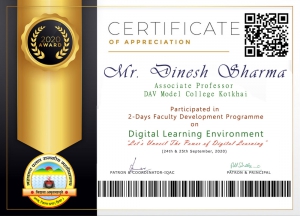 Participant Detail Mr. Dinesh Sharma Associate Professor DAV Model College Kotkhai Session Details Participant present in all the sessions on 24th & 25th September, 2020. Barcode ID Mr. Dinesh SharmaMPGCAMBfdp2020p01
 Participant Detail Dr. Nidhi Sharma Assistant Professor Govt. College Daulatpur Chowk Session Details Participant present in all the sessions on 24th & 25th September, 2020. Barcode ID Dr. Nidhi SharmaMPGCAMBfdp2020p02
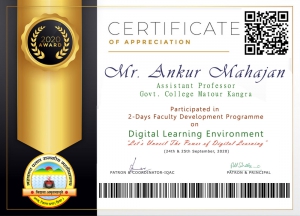 Participant Detail Mr. Ankur Mahajan Assistant Professor Govt. College Matour Kangra Session Details Participant present in all the sessions on 24th & 25th September, 2020. Barcode ID Mr. Ankur MahajannMPGCAMBnfdp2020p03
 Participant Detail Dr. Nidhi Sharma Assistant Professor Govt. College Matour Kangra Session Details Participant present in all the sessions on 24th & 25th September, 2020. Barcode ID Dr. Nidhi SharmaMPGCAMBfdp2020p04
 Participant Detail Dr. R. K. Kaundal Associate Professor Govt. Degree College Matour Session Details Participant present in all the sessions on 24th & 25th September, 2020. Barcode ID Dr. R. K. KaundalMPGCAMBfdp2020p05
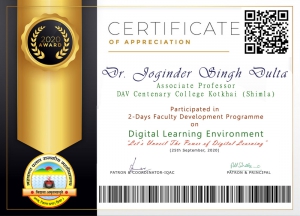 Participant Detail Dr. Joginder Singh Dulta Associate Professor DAV Centenary College Kotkhai (Shimla) Session Details Participant present in last 2 sessions on 25th September, 2020. Barcode ID Dr. Joginder Singh DultaMPGCAMBfdp2020p06
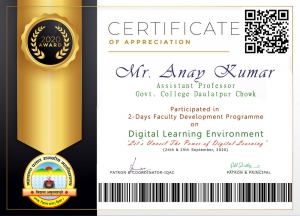 Participant Detail Dr. Nidhi Sharma Assistant Professor Govt. College Matour Kangra Session Details Participant present in all the sessions on 24th & 25th September, 2020. Barcode ID Dr. Nidhi SharmaMPGCAMBfdp2020p04
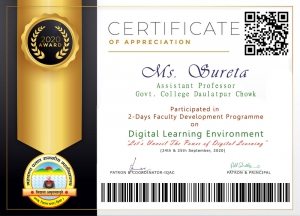 Participant Detail Dr. Nidhi Sharma Assistant Professor Govt. College Matour Kangra Session Details Participant present in all the sessions on 24th & 25th September, 2020. Barcode ID Dr. Nidhi SharmaMPGCAMBfdp2020p04
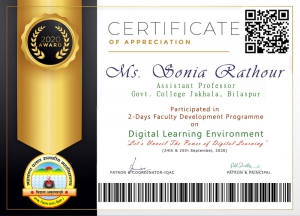 Participant Detail Ms. Sonia Rathour Assistant Professor Govt. College Jukhala, Bilaspur Session Details Participant present in all the sessions on 24th & 25th September, 2020. Barcode ID Ms. Sonia RathourMPGCAMBfdp2020p10
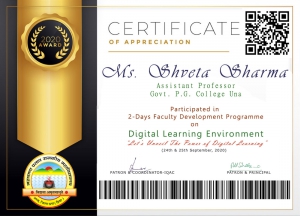 Participant Detail Ms. Shveta Sharma Assistant Professor Govt. P.G. College Una Session Details Participant present in all the sessions on 24th & 25th September, 2020. Barcode ID Ms. Shveta SharmaMPGCAMBfdp2020p11
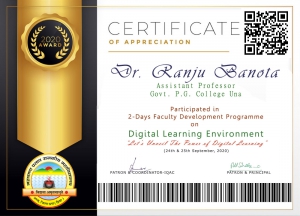 Participant Detail Dr. Ranju Banota Assistant Professor Govt. P.G. College Una Session Details Participant present in all the sessions on 24th & 25th September, 2020. Barcode ID Dr. Ranju BanotaMPGCAMBfdp2020p12
 Participant Detail Ms. Anu Lakhanpal Attri Associate Professor Music (Inst) Govt. P.G. College Una Session Details Participant present in all the sessions on 24th & 25th September, 2020. Barcode ID Ms. Anu Lakhanpal AttriMPGCAMBfdp2020p13
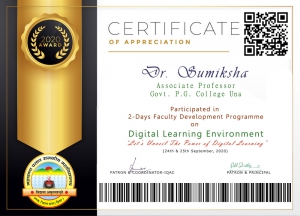 Dr. Sumiksha Associate Professor Govt. P.G. College Una
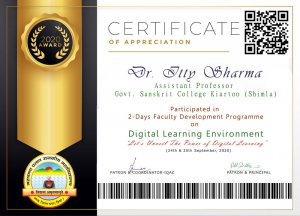 Participant Detail Dr. Itty Sharma Assistant Professor Govt. Sanskrit College Kiartoo Shimla Session Details Participant present in all the sessions on 24th & 25th September, 2020. Barcode ID Itty SharmaMPGCAMBfdp2020p15
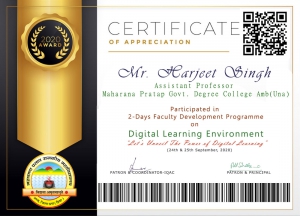 Participant Detail
Mr. Harjeet Singh
Assistant Professor
Maharana Pratap Govt. Degree College Amb (Una)
Session Details
Participant present in all the sessions on 24th & 25th September, 2020.
Barcode ID
Mr. Harjeet SinghMPGCAMBfdp2020p16
Participant Detail
Mr. Harjeet Singh
Assistant Professor
Maharana Pratap Govt. Degree College Amb (Una)
Session Details
Participant present in all the sessions on 24th & 25th September, 2020.
Barcode ID
Mr. Harjeet SinghMPGCAMBfdp2020p16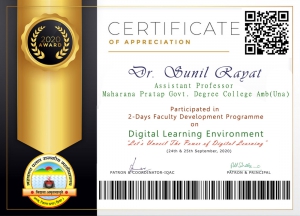 Participant Detail
Dr. Sunil Rayat
Assistant Professor
Maharana Pratap Govt. Degree College Amb (Una)
Session Details
Participant present in all the sessions on 24th & 25th September, 2020.
Barcode ID
Dr. Sunil RayatMPGCAMBfdp2020p17
Participant Detail
Dr. Sunil Rayat
Assistant Professor
Maharana Pratap Govt. Degree College Amb (Una)
Session Details
Participant present in all the sessions on 24th & 25th September, 2020.
Barcode ID
Dr. Sunil RayatMPGCAMBfdp2020p17
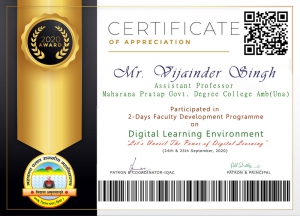 Participant Detail
Mr. Vijainder Singh
Assistant Professor
Maharana Pratap Govt. Degree College Amb (Una)
Session Details
Participant present in all the sessions on 24th & 25th September, 2020.
Barcode ID
Mr. Vijainder SinghMPGCAMBfdp2020p18
Participant Detail
Mr. Vijainder Singh
Assistant Professor
Maharana Pratap Govt. Degree College Amb (Una)
Session Details
Participant present in all the sessions on 24th & 25th September, 2020.
Barcode ID
Mr. Vijainder SinghMPGCAMBfdp2020p18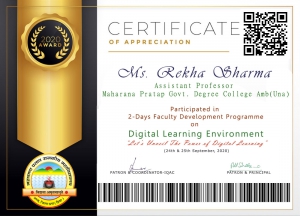 Participant Detail Ms. Rekha Sharma Assistant Professor Maharana Pratap Govt. Degree College Amb (Una) Session Details Participant present in all the sessions on 24th & 25th September, 2020. Barcode ID Ms. Rekha SharmaMPGCAMBfdp2020p19
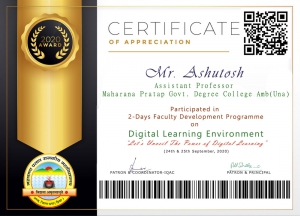 Participant Detail Mr. Ashutosh Assistant Professor Maharana Pratap Govt. Degree College Amb (Una) Session Details Participant present in all the sessions on 24th & 25th September, 2020. Barcode ID Mr. AshutoshMPGCAMBfdp2020p20
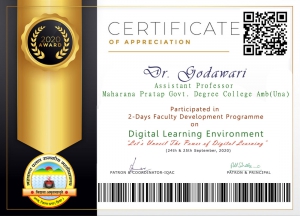 Participant Detail Dr. Godawari Assistant Professor Maharana Pratap Govt. Degree College Amb (Una) Session Details Participant present in all the sessions on 24th & 25th September, 2020. Barcode ID Dr. GodawariMPGCAMBfdp2020p21
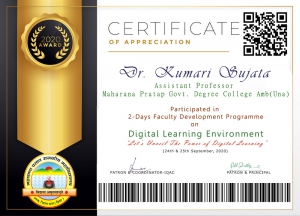 Participant Detail Dr. Kumari Sujata Assistant Professor Maharana Pratap Govt. Degree College Amb (Una) Session Details Participant present in all the sessions on 24th & 25th September, 2020. Barcode ID Dr. Kumari SujataMPGCAMBfdp2020p22
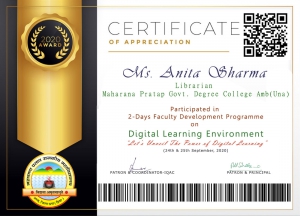 Participant Detail
Ms. Anita Sharma
Librarian
Maharana Pratap Govt. Degree College Amb (Una)
Session Details
Participant present in all the sessions on 24th & 25th September, 2020.
Barcode ID
Ms. Anita SharmaMPGCAMBfdp2020p23
Participant Detail
Ms. Anita Sharma
Librarian
Maharana Pratap Govt. Degree College Amb (Una)
Session Details
Participant present in all the sessions on 24th & 25th September, 2020.
Barcode ID
Ms. Anita SharmaMPGCAMBfdp2020p23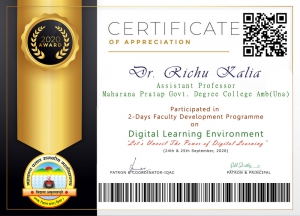 Participant Detail
Dr. Richu Kalia
Assistant Professor
Maharana Pratap Govt. Degree College Amb (Una)
Session Details
Participant present in all the sessions on 24th & 25th September, 2020.
Barcode ID
Dr. Richu KaliaMPGCAMBfdp2020p24
Participant Detail
Dr. Richu Kalia
Assistant Professor
Maharana Pratap Govt. Degree College Amb (Una)
Session Details
Participant present in all the sessions on 24th & 25th September, 2020.
Barcode ID
Dr. Richu KaliaMPGCAMBfdp2020p24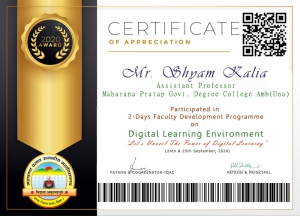 Participant Detail Mr. Shyam Kalia Assistant Professor Maharana Pratap Govt. Degree College Amb (Una) Session Details Participant present in all the sessions on 24th & 25th September, 2020. Barcode ID Mr. Shyam KaliaMPGCAMBfdp2020p25
 Participant Detail Mr. Jag Mohan Assistant Professor Maharana Pratap Govt. Degree College Amb (Una) Session Details Participant present in all the sessions on 24th & 25th September, 2020. Barcode ID Mr. Jag MohanMPGCAMBfdp2020p26
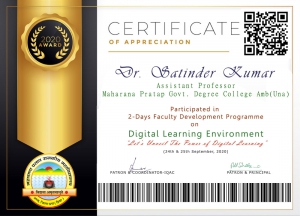 Participant Detail
Dr. Satinder Kumar
Assistant Professor
Maharana Pratap Govt. Degree College Amb (Una)
Session Details
Participant present in all the sessions on 24th & 25th September, 2020.
Barcode ID
Dr. Satinder KumarMPGCAMBfdp2020p27
Participant Detail
Dr. Satinder Kumar
Assistant Professor
Maharana Pratap Govt. Degree College Amb (Una)
Session Details
Participant present in all the sessions on 24th & 25th September, 2020.
Barcode ID
Dr. Satinder KumarMPGCAMBfdp2020p27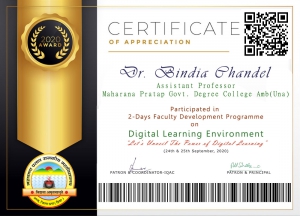 Participant Detail Dr. Bindia Chandel Assistant Professor Maharana Pratap Govt. Degree College Amb (Una) Session Details Participant present in all the sessions on 24th & 25th September, 2020. Barcode ID Dr. Bindia ChandelMPGCAMBfdp2020p28
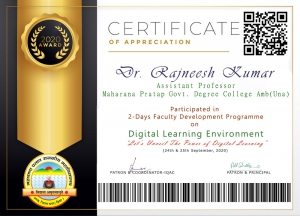 Participant Detail Dr. Rajneesh Kumar Assistant Professor Maharana Pratap Govt. Degree College Amb (Una) Session Details Participant present in all the sessions on 24th & 25th September, 2020. Barcode ID Dr. Rajneesh KumarMPGCAMBfdp2020p29
 Participant Detail
Mr. Lakhbir Singh
Assistant Professor
Maharana Pratap Govt. Degree College Amb (Una)
Session Details
Participant present in all the sessions on 24th & 25th September, 2020.
Barcode ID
Mr. Lakhbir SinghMPGCAMBfdp2020p30
Participant Detail
Mr. Lakhbir Singh
Assistant Professor
Maharana Pratap Govt. Degree College Amb (Una)
Session Details
Participant present in all the sessions on 24th & 25th September, 2020.
Barcode ID
Mr. Lakhbir SinghMPGCAMBfdp2020p30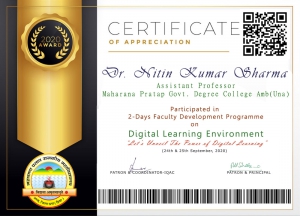 Participant Detail
Dr. Nitin Kumar Sharma
Assistant Professor
Maharana Pratap Govt. Degree College Amb (Una)
Session Details
Participant present in all the sessions on 24th & 25th September, 2020.
Barcode ID
Dr. Nitin Kumar SharmaMPGCAMBfdp2020p31
Participant Detail
Dr. Nitin Kumar Sharma
Assistant Professor
Maharana Pratap Govt. Degree College Amb (Una)
Session Details
Participant present in all the sessions on 24th & 25th September, 2020.
Barcode ID
Dr. Nitin Kumar SharmaMPGCAMBfdp2020p31
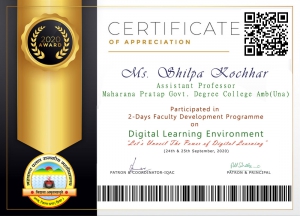 Participant Detail
Ms. Shilpa Kochhar
Assistant Professor
Maharana Pratap Govt. Degree College Amb (Una)
Session Details
Participant present in all the sessions on 24th & 25th September, 2020.
Barcode ID
Ms. Shilpa KochharMPGCAMBfdp2020p32
Participant Detail
Ms. Shilpa Kochhar
Assistant Professor
Maharana Pratap Govt. Degree College Amb (Una)
Session Details
Participant present in all the sessions on 24th & 25th September, 2020.
Barcode ID
Ms. Shilpa KochharMPGCAMBfdp2020p32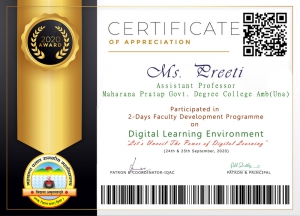 Participant Detail Ms. Preeti Assistant Professor Maharana Pratap Govt. Degree College Amb (Una) Session Details Participant present in all the sessions on 24th & 25th September, 2020. Barcode ID Ms. PreetiMPGCAMBfdp2020p33
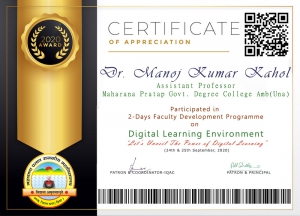 Participant Detail Dr. Manoj Kumar Kahol Assistant Professor Maharana Pratap Govt. Degree College Amb (Una) Session Details Participant present in all the sessions on 24th & 25th September, 2020. Barcode ID Dr. Manoj Kumar KaholMPGCAMBfdp2020p36
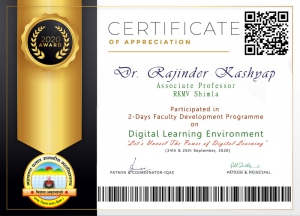 Participant Detail
Dr. Rajinder Kashyap
Associate Professor
RKMV Shimla
Session Details
Participant present in all the sessions on 24th & 25th September, 2020.
Barcode ID
Dr. Rajinder KashyapMPGCAMBfdp2020p37
Participant Detail
Dr. Rajinder Kashyap
Associate Professor
RKMV Shimla
Session Details
Participant present in all the sessions on 24th & 25th September, 2020.
Barcode ID
Dr. Rajinder KashyapMPGCAMBfdp2020p37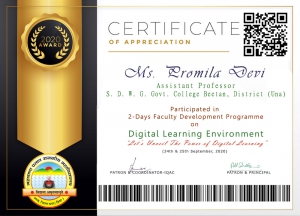 Participant Detail
Ms. Promila Devi
Assistant Professor
S. D. W. G. Govt. College Beetan, District Una(H.P)
Session Details
Participant present in all the sessions on 24th & 25th September, 2020.
Barcode ID
Ms. Promila DeviMPGCAMBfdp2020p39
Participant Detail
Ms. Promila Devi
Assistant Professor
S. D. W. G. Govt. College Beetan, District Una(H.P)
Session Details
Participant present in all the sessions on 24th & 25th September, 2020.
Barcode ID
Ms. Promila DeviMPGCAMBfdp2020p39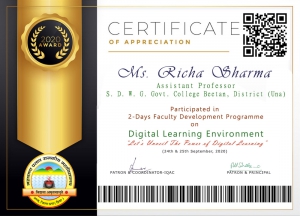 Participant Detail Ms. Richa Sharma Assistant Professor S. D. W. G. Govt. College Beetan, District Una(H.P) Session Details Participant present in all the sessions on 24th & 25th September, 2020. Barcode ID Ms. Richa SharmaMPGCAMBfdp2020p38
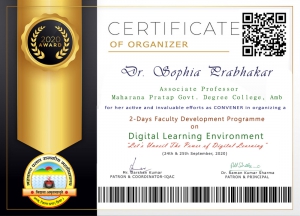 Organizer's Detail Dr. Sophia Prabhakar Associate Professor Maharana Pratap Govt. Degree College, Amb Session Details Organizer present in all the sessions on 24th & 25th September, 2020. Barcode ID Dr. Sophia Prabhakar\MPGCAMB\FDP2020O03
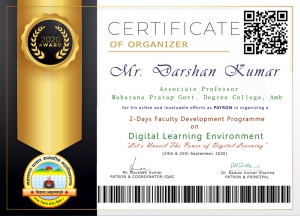 Organizer's Detail Mr. Darshan Kumar Associate Professor Maharana Pratap Govt. Degree College, Amb FDP-Patron Session Details Organizer present in all the sessions on 24th & 25th September, 2020. Barcode ID Mr. Darshan Kumar\MPGCAMB\FDP2020O02
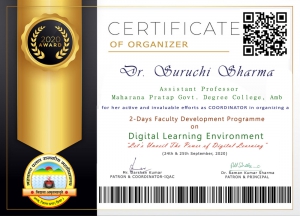 Organizer's Detail Dr. Suruchi Sharma Assistant Professor Maharana Pratap Govt. Degree College, Amb FDP-Coordinator Session Details Organizer present in all the sessions on 24th & 25th September, 2020. Barcode ID Dr. Suruchi Sharma\MPGCAMB\FDP2020O05
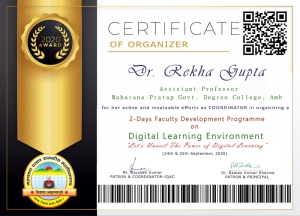 Participant Detail Ms. Richa Sharma Assistant Professor S. D. W. G. Govt. College Beetan, District Una(H.P) Session Details Participant present in all the sessions on 24th & 25th September, 2020. Barcode ID Ms. Richa SharmaMPGCAMBfdp2020p38
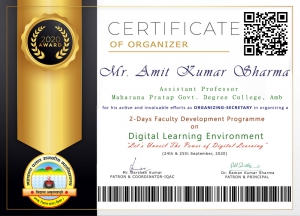 Organizer's Detail Mr. Amit Kumar Sharma Assistant Professor Maharana Pratap Govt. Degree College, Amb FDP-Organizing Secretary Session Details Organizer present in all the sessions on 24th & 25th September, 2020. Barcode ID Mr. Amit Kumar Sharma\MPGCAMB\FDP2020O07
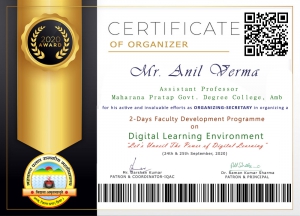 Organizer's Detail Mr. Anil Verma Assistant Professor Maharana Pratap Govt. Degree College, Amb FDP-Organizing Secretary Session Details Organizer present in all the sessions on 24th & 25th September, 2020. Barcode ID Mr. Anil Verma\MPGCAMB\FDP2020O08
Leave a Reply
Want to join the discussion?Feel free to contribute!