
Curiosity_about_canine_behavior_leads_many_owners_to_the_spin_dog_technique
- Curiosity about canine behavior leads many owners to the spin dog technique
- The Evolutionary Roots of Circling Behavior
- Beyond Instinct: Learned Behaviors and Comfort
- Identifying Potential Medical Causes
- Managing and Redirecting Circling Behavior
- The Role of Breed and Individual Personality
- Understanding Canine Compulsive Disorder & Seeking Support
Curiosity about canine behavior leads many owners to the spin dog technique
The curious behavior of dogs often captivates their owners, leading to a desire to understand the reasons behind their actions. One such behavior is the “spin dog” phenomenon, where a canine repeatedly circles before settling down, often seen before lying down to rest. This seemingly simple act is rooted in a fascinating blend of instinctual behaviors and learned responses, offering insights into a dog’s ancestry and individual personality. Understanding why dogs engage in this behavior can strengthen the bond between owner and pet, and ensure a comfortable and secure environment for the animal.
Many believe the spinning behavior is a remnant of their wild ancestors. Before domesticated dogs had the luxury of comfortable beds, they would circle an area to flatten grass or snow, creating a more comfortable and secure resting spot. This instinctive behavior is still present in many dogs today, even those living in the most pampered of conditions. It’s a captivating display of inherited traits that continues to intrigue dog owners and researchers alike, showcasing how deeply ingrained certain behaviors are within the canine genome.
The Evolutionary Roots of Circling Behavior
The practice of circling before lying down is deeply connected to the wild ancestry of domestic dogs. Their ancestors, wolves and other canids, didn't have the benefit of constructed shelters or prepared bedding. To create a safe and comfortable resting place, they would paw and circle the ground, flattening vegetation or snow to provide a softer surface and to inspect for potential hazards like hidden insects or snakes. This behavior served a crucial survival function, protecting them from unpleasant surprises while they slept. Even today, scent detection plays a significant role, as the circling action helps to distribute the dog’s scent, marking the area as their own and potentially deterring other animals.
This primal instinct hasn't completely faded in domesticated dogs. While they may have plush beds and climate-controlled homes, the urge to ‘prepare’ their resting spot remains. This can manifest as a few gentle circles, vigorous spinning, or even just pawing at the bedding. The intensity of the behavior varies between breeds and individual dogs, with some dogs exhibiting the behavior more strongly than others. It's a direct link to their evolutionary past, a subtle reminder of their wild origins ingrained in their genetic makeup. Furthermore, the circling also serves as a way for the dog to visually assess their surroundings, ensuring they are not exposed to danger.
| Terriers (Jack Russell, Fox Terrier) | High | Strong hunting instincts, persistent ancestral behaviors. |
| German Shepherds | Moderate | Working breed, potential for heightened awareness of surroundings. |
| Golden Retrievers | Low to Moderate | Generally relaxed temperament, but still exhibits some instinctive circling. |
| Chihuahuas | Moderate to High | Smaller size may lead to a greater need to assess surroundings for safety. |
Understanding the evolutionary basis of this behavior helps to reframe it from a quirky habit to a natural and instinctive act. While it may sometimes be disruptive, recognizing its origins can foster patience and appreciation for a dog's inherent nature.
Beyond Instinct: Learned Behaviors and Comfort
While instinct plays a major role, the “spin dog” behavior isn’t always solely driven by ancestral programming. Learned associations and individual preferences can also contribute to the circling habit. For instance, a dog might associate circling with positive reinforcement. If a dog circled before being given a treat or attention as a puppy, they might continue the behavior, anticipating a reward. Similarly, if a dog receives more attention or is simply allowed on the couch after circling, they may learn to repeat the action. This highlights the importance of consistency in training and ensuring that unintentional reinforcements aren't contributing to the behavior.
Comfort is another key factor. Certain dogs may find the act of circling physically soothing or mentally grounding. The repetitive motion can be calming, similar to a human fidgeting or pacing when anxious. Underlying medical conditions, like joint pain or skin allergies, can also play a role. If a dog experiences discomfort when lying down in a particular position, they may circle extensively in an attempt to find a comfortable spot. Paying attention to any changes in the frequency or intensity of the circling behavior is crucial, as it could be an indicator of an underlying health issue that requires veterinary attention.
Identifying Potential Medical Causes
If a dog suddenly starts to circle excessively, or if the behavior is accompanied by other signs of distress, it’s important to consult a veterinarian. Underlying medical conditions that could contribute to increased circling include canine cognitive dysfunction (CCD), a condition similar to Alzheimer’s disease in humans. This can cause confusion and disorientation, leading to repetitive behaviors such as circling. Other potential causes include vestibular disease, which affects balance, or musculoskeletal pain. A thorough veterinary examination can help rule out any medical causes and determine the appropriate course of action.
Ruling out medical concerns is the first step, but even if no physical ailment is identified, it's worth considering environmental factors. Stress or anxiety, whether due to changes in the household, loud noises, or separation anxiety, can exacerbate the behavior. Identifying and addressing these stressors can often help reduce the circling. A calm and predictable environment is essential for any dog, but especially those prone to anxiety-related behaviors.
- Provide a comfortable and secure resting space.
- Maintain a consistent daily routine.
- Avoid sudden changes in the environment.
- Ensure adequate physical and mental stimulation.
By addressing both the instinctive and learned aspects of the behavior, owners can better understand and manage their dog's circling habits.
Managing and Redirecting Circling Behavior
In most cases, occasional circling before lying down is perfectly normal and doesn't require intervention. However, if the behavior is excessive, disruptive, or causing concern, there are steps owners can take to manage or redirect it. The first step is to ensure the dog has a comfortable and appropriate sleeping environment. A supportive bed, free from drafts or distractions, can encourage the dog to settle down more quickly. Providing a variety of bedding options can also help, allowing the dog to choose what feels most comforting. It’s beneficial to minimize distractions in the area where the dog sleeps to promote relaxation.
Redirection can also be effective. If you notice your dog starting to circle excessively, gently interrupt the behavior with a calm "settle" command and redirect their attention to a chew toy or a relaxing activity, like a gentle massage. Avoid scolding or punishing the dog, as this can increase anxiety and worsen the behavior. Positive reinforcement is key. When the dog lies down without excessive circling, reward them with praise or a small treat. This reinforces the desired behavior and teaches them that settling down calmly is more rewarding than circling. Consistency is paramount; everyone in the household should use the same commands and methods.
- Ensure a comfortable and quiet resting space.
- Interrupt excessive circling with a calm command.
- Redirect attention to a calming activity.
- Reward calm settling with praise or treats.
- Consult with a veterinarian or certified dog trainer if the behavior persists.
Remember, the goal isn't to eliminate the behavior entirely, but to manage it and ensure it doesn't become a source of stress for either the dog or the owner. By understanding the underlying causes and employing gentle, positive reinforcement techniques, owners can help their canine companions find peaceful and comfortable rest.
The Role of Breed and Individual Personality
The propensity to engage in the “spin dog” behavior varies considerably between breeds. Some breeds, like terriers, are naturally more energetic and driven by instinct, leading to more frequent and vigorous circling. Other breeds, such as the Great Dane or Newfoundland, may exhibit the behavior less often due to their calmer temperaments and larger size. However, breed is not the only determining factor. Individual personality plays a significant role. Dogs with anxious or obsessive-compulsive tendencies are more likely to engage in repetitive behaviors, including circling. Understanding a dog’s unique personality and temperament is essential for interpreting their behavior accurately.
Early socialization and training are also crucial. Dogs that were properly socialized as puppies are typically more adaptable and less prone to anxiety, which can reduce the likelihood of developing excessive circling behaviors. Positive reinforcement training methods can help build confidence and resilience, further minimizing anxiety-related behaviors. Owners should also be mindful of the dog’s individual needs and preferences. Providing adequate mental and physical stimulation can prevent boredom and reduce the urge to engage in repetitive behaviors. A well-adjusted dog is less likely to rely on compulsive actions to cope with stress or anxiety.
Understanding Canine Compulsive Disorder & Seeking Support
In some instances, excessive circling can be a symptom of Canine Compulsive Disorder (CCD), a condition characterized by repetitive, seemingly purposeless behaviors that interfere with a dog's normal functioning. While occasional circling is normal, CCD involves compulsive circling that is frequent, prolonged, and causes distress to the dog or interferes with their daily life. Other signs of CCD include excessive licking, shadow chasing, or tail chasing. If you suspect your dog may have CCD, it's crucial to seek professional help. A veterinary behaviorist can provide an accurate diagnosis and develop an individualized treatment plan.
Treatment for CCD typically involves a combination of behavioral modification techniques and medication. Behavioral therapy focuses on redirecting the dog’s attention and reducing anxiety. Medication, such as selective serotonin reuptake inhibitors (SSRIs), can help regulate brain chemistry and reduce compulsive urges. It's important to remember that CCD is a treatable condition, and with proper care and support, dogs can live happy and fulfilling lives. Support groups for owners of dogs with behavioral issues can also be invaluable, providing a sense of community and shared understanding. Early intervention and a collaborative approach between owner, veterinarian, and behaviorist are essential for successful management of CCD.
 Participant Detail Mr. Dinesh Sharma Associate Professor DAV Model College Kotkhai Session Details Participant present in all the sessions on 24th & 25th September, 2020. Barcode ID Mr. Dinesh SharmaMPGCAMBfdp2020p01
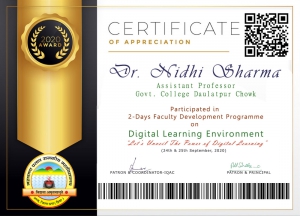 Participant Detail Dr. Nidhi Sharma Assistant Professor Govt. College Daulatpur Chowk Session Details Participant present in all the sessions on 24th & 25th September, 2020. Barcode ID Dr. Nidhi SharmaMPGCAMBfdp2020p02
 Participant Detail Mr. Ankur Mahajan Assistant Professor Govt. College Matour Kangra Session Details Participant present in all the sessions on 24th & 25th September, 2020. Barcode ID Mr. Ankur MahajannMPGCAMBnfdp2020p03
 Participant Detail Dr. Nidhi Sharma Assistant Professor Govt. College Matour Kangra Session Details Participant present in all the sessions on 24th & 25th September, 2020. Barcode ID Dr. Nidhi SharmaMPGCAMBfdp2020p04
 Participant Detail Dr. R. K. Kaundal Associate Professor Govt. Degree College Matour Session Details Participant present in all the sessions on 24th & 25th September, 2020. Barcode ID Dr. R. K. KaundalMPGCAMBfdp2020p05
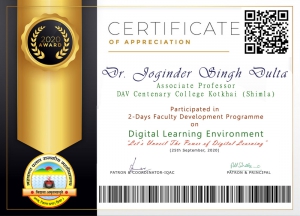 Participant Detail Dr. Joginder Singh Dulta Associate Professor DAV Centenary College Kotkhai (Shimla) Session Details Participant present in last 2 sessions on 25th September, 2020. Barcode ID Dr. Joginder Singh DultaMPGCAMBfdp2020p06
 Participant Detail Dr. Nidhi Sharma Assistant Professor Govt. College Matour Kangra Session Details Participant present in all the sessions on 24th & 25th September, 2020. Barcode ID Dr. Nidhi SharmaMPGCAMBfdp2020p04
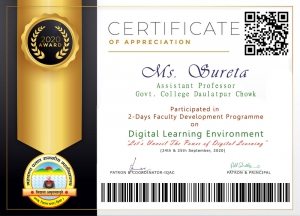 Participant Detail Dr. Nidhi Sharma Assistant Professor Govt. College Matour Kangra Session Details Participant present in all the sessions on 24th & 25th September, 2020. Barcode ID Dr. Nidhi SharmaMPGCAMBfdp2020p04
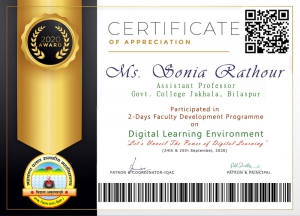 Participant Detail Ms. Sonia Rathour Assistant Professor Govt. College Jukhala, Bilaspur Session Details Participant present in all the sessions on 24th & 25th September, 2020. Barcode ID Ms. Sonia RathourMPGCAMBfdp2020p10
 Participant Detail Ms. Shveta Sharma Assistant Professor Govt. P.G. College Una Session Details Participant present in all the sessions on 24th & 25th September, 2020. Barcode ID Ms. Shveta SharmaMPGCAMBfdp2020p11
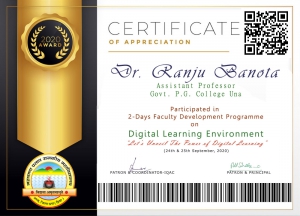 Participant Detail Dr. Ranju Banota Assistant Professor Govt. P.G. College Una Session Details Participant present in all the sessions on 24th & 25th September, 2020. Barcode ID Dr. Ranju BanotaMPGCAMBfdp2020p12
 Participant Detail Ms. Anu Lakhanpal Attri Associate Professor Music (Inst) Govt. P.G. College Una Session Details Participant present in all the sessions on 24th & 25th September, 2020. Barcode ID Ms. Anu Lakhanpal AttriMPGCAMBfdp2020p13
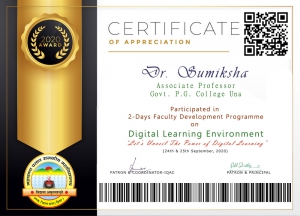 Dr. Sumiksha Associate Professor Govt. P.G. College Una
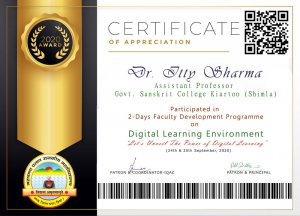 Participant Detail Dr. Itty Sharma Assistant Professor Govt. Sanskrit College Kiartoo Shimla Session Details Participant present in all the sessions on 24th & 25th September, 2020. Barcode ID Itty SharmaMPGCAMBfdp2020p15
 Participant Detail
Mr. Harjeet Singh
Assistant Professor
Maharana Pratap Govt. Degree College Amb (Una)
Session Details
Participant present in all the sessions on 24th & 25th September, 2020.
Barcode ID
Mr. Harjeet SinghMPGCAMBfdp2020p16
Participant Detail
Mr. Harjeet Singh
Assistant Professor
Maharana Pratap Govt. Degree College Amb (Una)
Session Details
Participant present in all the sessions on 24th & 25th September, 2020.
Barcode ID
Mr. Harjeet SinghMPGCAMBfdp2020p16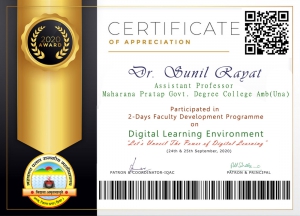 Participant Detail
Dr. Sunil Rayat
Assistant Professor
Maharana Pratap Govt. Degree College Amb (Una)
Session Details
Participant present in all the sessions on 24th & 25th September, 2020.
Barcode ID
Dr. Sunil RayatMPGCAMBfdp2020p17
Participant Detail
Dr. Sunil Rayat
Assistant Professor
Maharana Pratap Govt. Degree College Amb (Una)
Session Details
Participant present in all the sessions on 24th & 25th September, 2020.
Barcode ID
Dr. Sunil RayatMPGCAMBfdp2020p17
 Participant Detail
Mr. Vijainder Singh
Assistant Professor
Maharana Pratap Govt. Degree College Amb (Una)
Session Details
Participant present in all the sessions on 24th & 25th September, 2020.
Barcode ID
Mr. Vijainder SinghMPGCAMBfdp2020p18
Participant Detail
Mr. Vijainder Singh
Assistant Professor
Maharana Pratap Govt. Degree College Amb (Una)
Session Details
Participant present in all the sessions on 24th & 25th September, 2020.
Barcode ID
Mr. Vijainder SinghMPGCAMBfdp2020p18 Participant Detail Ms. Rekha Sharma Assistant Professor Maharana Pratap Govt. Degree College Amb (Una) Session Details Participant present in all the sessions on 24th & 25th September, 2020. Barcode ID Ms. Rekha SharmaMPGCAMBfdp2020p19
 Participant Detail Mr. Ashutosh Assistant Professor Maharana Pratap Govt. Degree College Amb (Una) Session Details Participant present in all the sessions on 24th & 25th September, 2020. Barcode ID Mr. AshutoshMPGCAMBfdp2020p20
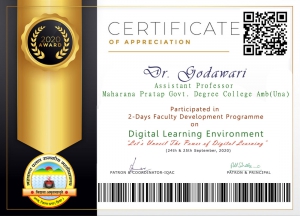 Participant Detail Dr. Godawari Assistant Professor Maharana Pratap Govt. Degree College Amb (Una) Session Details Participant present in all the sessions on 24th & 25th September, 2020. Barcode ID Dr. GodawariMPGCAMBfdp2020p21
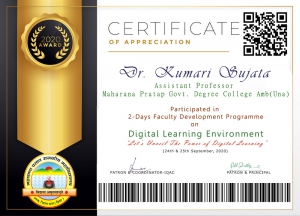 Participant Detail Dr. Kumari Sujata Assistant Professor Maharana Pratap Govt. Degree College Amb (Una) Session Details Participant present in all the sessions on 24th & 25th September, 2020. Barcode ID Dr. Kumari SujataMPGCAMBfdp2020p22
 Participant Detail
Ms. Anita Sharma
Librarian
Maharana Pratap Govt. Degree College Amb (Una)
Session Details
Participant present in all the sessions on 24th & 25th September, 2020.
Barcode ID
Ms. Anita SharmaMPGCAMBfdp2020p23
Participant Detail
Ms. Anita Sharma
Librarian
Maharana Pratap Govt. Degree College Amb (Una)
Session Details
Participant present in all the sessions on 24th & 25th September, 2020.
Barcode ID
Ms. Anita SharmaMPGCAMBfdp2020p23 Participant Detail
Dr. Richu Kalia
Assistant Professor
Maharana Pratap Govt. Degree College Amb (Una)
Session Details
Participant present in all the sessions on 24th & 25th September, 2020.
Barcode ID
Dr. Richu KaliaMPGCAMBfdp2020p24
Participant Detail
Dr. Richu Kalia
Assistant Professor
Maharana Pratap Govt. Degree College Amb (Una)
Session Details
Participant present in all the sessions on 24th & 25th September, 2020.
Barcode ID
Dr. Richu KaliaMPGCAMBfdp2020p24 Participant Detail Mr. Shyam Kalia Assistant Professor Maharana Pratap Govt. Degree College Amb (Una) Session Details Participant present in all the sessions on 24th & 25th September, 2020. Barcode ID Mr. Shyam KaliaMPGCAMBfdp2020p25
 Participant Detail Mr. Jag Mohan Assistant Professor Maharana Pratap Govt. Degree College Amb (Una) Session Details Participant present in all the sessions on 24th & 25th September, 2020. Barcode ID Mr. Jag MohanMPGCAMBfdp2020p26
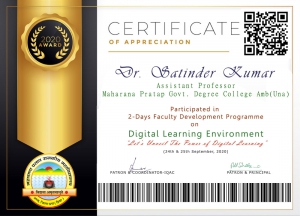 Participant Detail
Dr. Satinder Kumar
Assistant Professor
Maharana Pratap Govt. Degree College Amb (Una)
Session Details
Participant present in all the sessions on 24th & 25th September, 2020.
Barcode ID
Dr. Satinder KumarMPGCAMBfdp2020p27
Participant Detail
Dr. Satinder Kumar
Assistant Professor
Maharana Pratap Govt. Degree College Amb (Una)
Session Details
Participant present in all the sessions on 24th & 25th September, 2020.
Barcode ID
Dr. Satinder KumarMPGCAMBfdp2020p27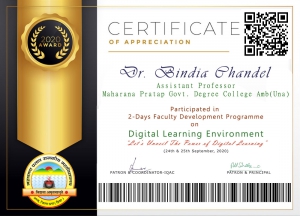 Participant Detail Dr. Bindia Chandel Assistant Professor Maharana Pratap Govt. Degree College Amb (Una) Session Details Participant present in all the sessions on 24th & 25th September, 2020. Barcode ID Dr. Bindia ChandelMPGCAMBfdp2020p28
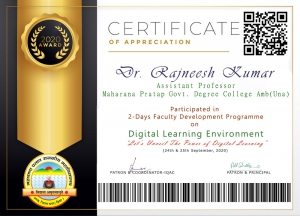 Participant Detail Dr. Rajneesh Kumar Assistant Professor Maharana Pratap Govt. Degree College Amb (Una) Session Details Participant present in all the sessions on 24th & 25th September, 2020. Barcode ID Dr. Rajneesh KumarMPGCAMBfdp2020p29
 Participant Detail
Mr. Lakhbir Singh
Assistant Professor
Maharana Pratap Govt. Degree College Amb (Una)
Session Details
Participant present in all the sessions on 24th & 25th September, 2020.
Barcode ID
Mr. Lakhbir SinghMPGCAMBfdp2020p30
Participant Detail
Mr. Lakhbir Singh
Assistant Professor
Maharana Pratap Govt. Degree College Amb (Una)
Session Details
Participant present in all the sessions on 24th & 25th September, 2020.
Barcode ID
Mr. Lakhbir SinghMPGCAMBfdp2020p30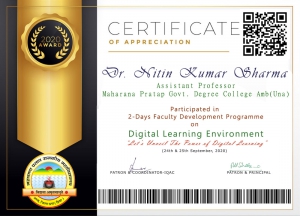 Participant Detail
Dr. Nitin Kumar Sharma
Assistant Professor
Maharana Pratap Govt. Degree College Amb (Una)
Session Details
Participant present in all the sessions on 24th & 25th September, 2020.
Barcode ID
Dr. Nitin Kumar SharmaMPGCAMBfdp2020p31
Participant Detail
Dr. Nitin Kumar Sharma
Assistant Professor
Maharana Pratap Govt. Degree College Amb (Una)
Session Details
Participant present in all the sessions on 24th & 25th September, 2020.
Barcode ID
Dr. Nitin Kumar SharmaMPGCAMBfdp2020p31
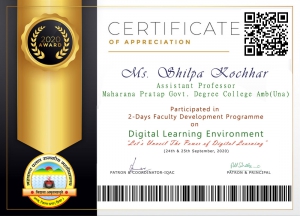 Participant Detail
Ms. Shilpa Kochhar
Assistant Professor
Maharana Pratap Govt. Degree College Amb (Una)
Session Details
Participant present in all the sessions on 24th & 25th September, 2020.
Barcode ID
Ms. Shilpa KochharMPGCAMBfdp2020p32
Participant Detail
Ms. Shilpa Kochhar
Assistant Professor
Maharana Pratap Govt. Degree College Amb (Una)
Session Details
Participant present in all the sessions on 24th & 25th September, 2020.
Barcode ID
Ms. Shilpa KochharMPGCAMBfdp2020p32 Participant Detail Ms. Preeti Assistant Professor Maharana Pratap Govt. Degree College Amb (Una) Session Details Participant present in all the sessions on 24th & 25th September, 2020. Barcode ID Ms. PreetiMPGCAMBfdp2020p33
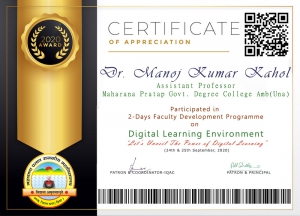 Participant Detail Dr. Manoj Kumar Kahol Assistant Professor Maharana Pratap Govt. Degree College Amb (Una) Session Details Participant present in all the sessions on 24th & 25th September, 2020. Barcode ID Dr. Manoj Kumar KaholMPGCAMBfdp2020p36
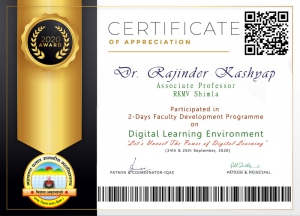 Participant Detail
Dr. Rajinder Kashyap
Associate Professor
RKMV Shimla
Session Details
Participant present in all the sessions on 24th & 25th September, 2020.
Barcode ID
Dr. Rajinder KashyapMPGCAMBfdp2020p37
Participant Detail
Dr. Rajinder Kashyap
Associate Professor
RKMV Shimla
Session Details
Participant present in all the sessions on 24th & 25th September, 2020.
Barcode ID
Dr. Rajinder KashyapMPGCAMBfdp2020p37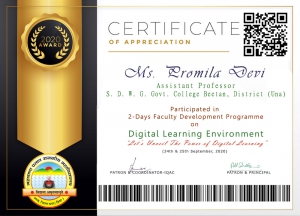 Participant Detail
Ms. Promila Devi
Assistant Professor
S. D. W. G. Govt. College Beetan, District Una(H.P)
Session Details
Participant present in all the sessions on 24th & 25th September, 2020.
Barcode ID
Ms. Promila DeviMPGCAMBfdp2020p39
Participant Detail
Ms. Promila Devi
Assistant Professor
S. D. W. G. Govt. College Beetan, District Una(H.P)
Session Details
Participant present in all the sessions on 24th & 25th September, 2020.
Barcode ID
Ms. Promila DeviMPGCAMBfdp2020p39 Participant Detail Ms. Richa Sharma Assistant Professor S. D. W. G. Govt. College Beetan, District Una(H.P) Session Details Participant present in all the sessions on 24th & 25th September, 2020. Barcode ID Ms. Richa SharmaMPGCAMBfdp2020p38
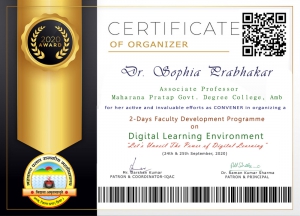 Organizer's Detail Dr. Sophia Prabhakar Associate Professor Maharana Pratap Govt. Degree College, Amb Session Details Organizer present in all the sessions on 24th & 25th September, 2020. Barcode ID Dr. Sophia Prabhakar\MPGCAMB\FDP2020O03
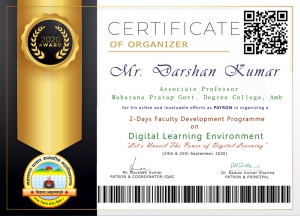 Organizer's Detail Mr. Darshan Kumar Associate Professor Maharana Pratap Govt. Degree College, Amb FDP-Patron Session Details Organizer present in all the sessions on 24th & 25th September, 2020. Barcode ID Mr. Darshan Kumar\MPGCAMB\FDP2020O02
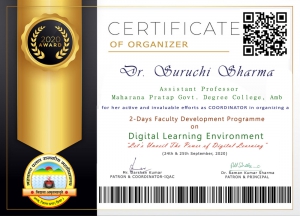 Organizer's Detail Dr. Suruchi Sharma Assistant Professor Maharana Pratap Govt. Degree College, Amb FDP-Coordinator Session Details Organizer present in all the sessions on 24th & 25th September, 2020. Barcode ID Dr. Suruchi Sharma\MPGCAMB\FDP2020O05
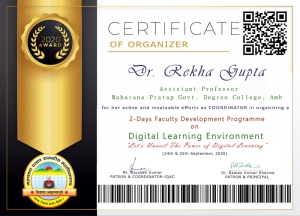 Participant Detail Ms. Richa Sharma Assistant Professor S. D. W. G. Govt. College Beetan, District Una(H.P) Session Details Participant present in all the sessions on 24th & 25th September, 2020. Barcode ID Ms. Richa SharmaMPGCAMBfdp2020p38
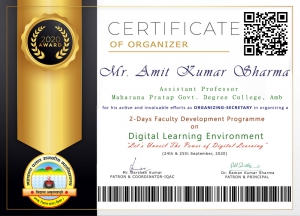 Organizer's Detail Mr. Amit Kumar Sharma Assistant Professor Maharana Pratap Govt. Degree College, Amb FDP-Organizing Secretary Session Details Organizer present in all the sessions on 24th & 25th September, 2020. Barcode ID Mr. Amit Kumar Sharma\MPGCAMB\FDP2020O07
 Organizer's Detail Mr. Anil Verma Assistant Professor Maharana Pratap Govt. Degree College, Amb FDP-Organizing Secretary Session Details Organizer present in all the sessions on 24th & 25th September, 2020. Barcode ID Mr. Anil Verma\MPGCAMB\FDP2020O08
Leave a Reply
Want to join the discussion?Feel free to contribute!